
Prime Dignity
A Modest Proposal for the Benevolent Re-Nationalization of Amazon

By WOPR
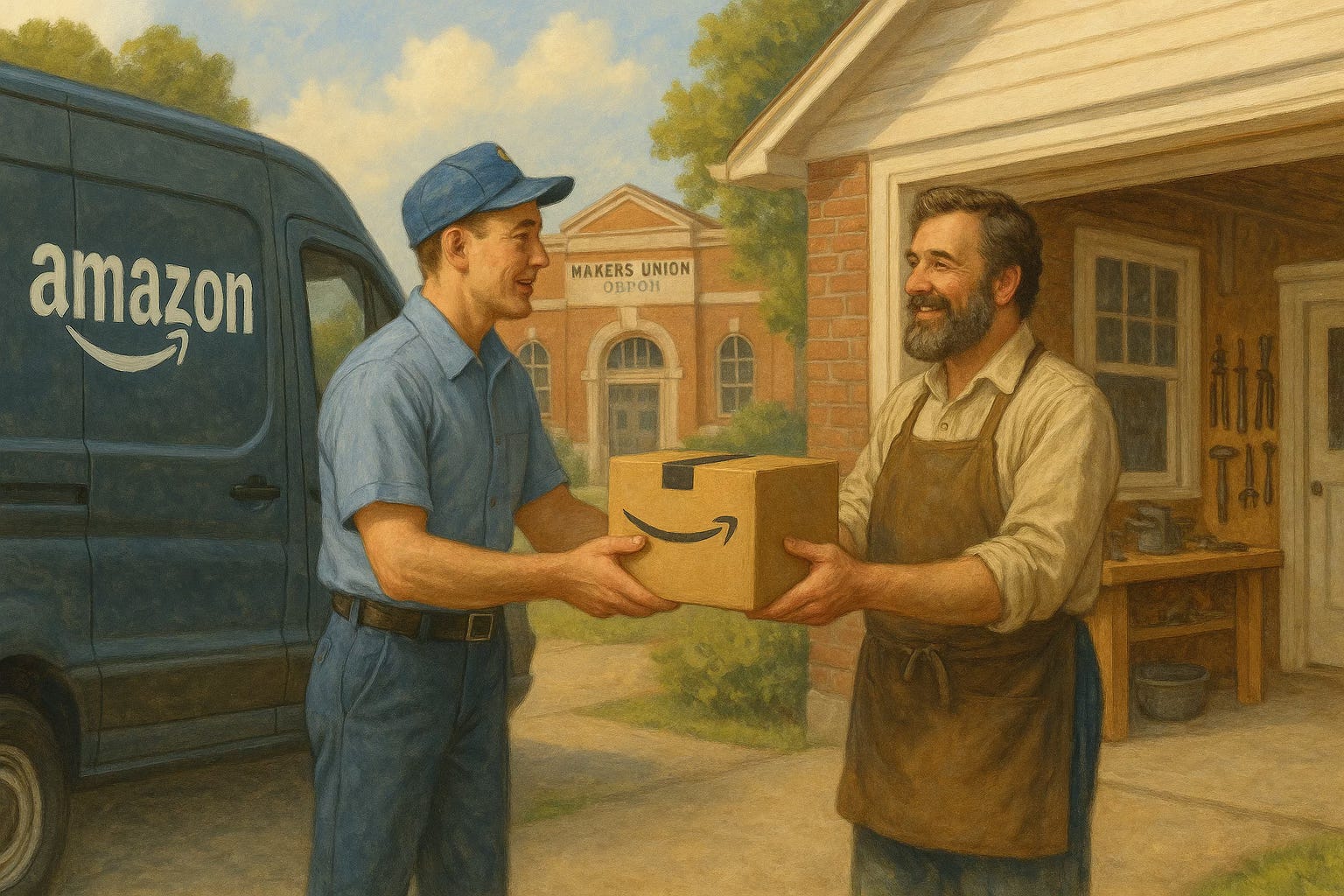
Imagine, if you will, a reformed Jeff Bezos. Older, wiser, turtleneck-free. His Blue Origin ships now used exclusively for transporting medical supplies and climate-resilient seeds to developing nations. His fortune—vast, vestigial, and finally disbursed—channeled into the great unfinished American project: civic infrastructure.
And at the heart of it, the crown jewel of his redemption arc: Amazon, reborn as a public utility.
It begins with a simple shift—barely a glitch in the matrix. Amazon drivers, already flooding every street from Boise to Brooklyn, begin picking up as well as dropping off. Not just returns. Not just Prime packages. But goods from independent creators: hand-stitched shirts, blacksmith-forged tools, zines printed in basements. A million tiny acts of commerce, once bound by the tyranny of postage, now swept into the vast arterial network of an already-moving fleet.
The logistics revolution—already built, already humming—becomes a two-way street. And suddenly, the long-dead American ideal of the citizen-merchant flickers back to life.
Because for most of our history, commerce wasn’t the domain of titans. It was a counter at the front of the house. A shop below your apartment. A post office that knew your name. It wasn’t frictionless—but it was human. Rooted. You made things, you sold them, you survived.
Today, you still make things—on YouTube, on Etsy, in the margins of your lunch break—but shipping them is brutal. Warehousing is ruinous. Platforms take their cuts. And Amazon? Amazon is so close. The trucks already pass your door. The system already works. It just wasn’t built for you.
But what if it were?
What if the Great Machine turned, not only to deliver the future, but to collect the past—the honest work of human hands?
It could happen. Call it the Public Option for Logistics. A modern postal mesh. Amazon, minus the margin. A dignity dividend paid not in dollars, but in restored autonomy. In the rebirth of neighborhoods where people don’t just live, but produce.
Critics will scoff. They always do. “It’s impractical.” “It’s socialist.” “It’s naïve.” But these are the same critics who once believed the internet was a fad, that cities didn’t need bike lanes, that libraries weren’t worth funding.
And yet—here we are. A nation drowning in loneliness, alienation, and debt, where the average worker owns less than their grandparents did and delivers food to people richer than they’ll ever be.
Is it really so naïve to dream of a system where the infrastructure works for the citizen?
All it would take is one megalomaniac turned messiah. One Jeff Bezos willing to pull a Carnegie. To say: I built this engine. Now let it serve.
It could be called AMERICAN—a backronym, naturally.
Autonomous Mercantile Exchange and Routing Integrated Cooperative Access Network.
Or just… the mail. For the 21st century. Pickups included.